The Chinese government announced on Wednesday that it will raise additional tariffs on goods imported from the United States to 84%, will add six U.S. companies to its list of unreliable entities, and will place 12 American entities on its export control list.
In other words, China acted quickly and firmly after the latest U.S. tariff hike on Chinese imports. But what would an anthropologist who studies China see in this situation?
Well, this isn't the space for a full thesis, but I can say that there is a very interesting anthropological difference in this trade war between the U.S. and China.
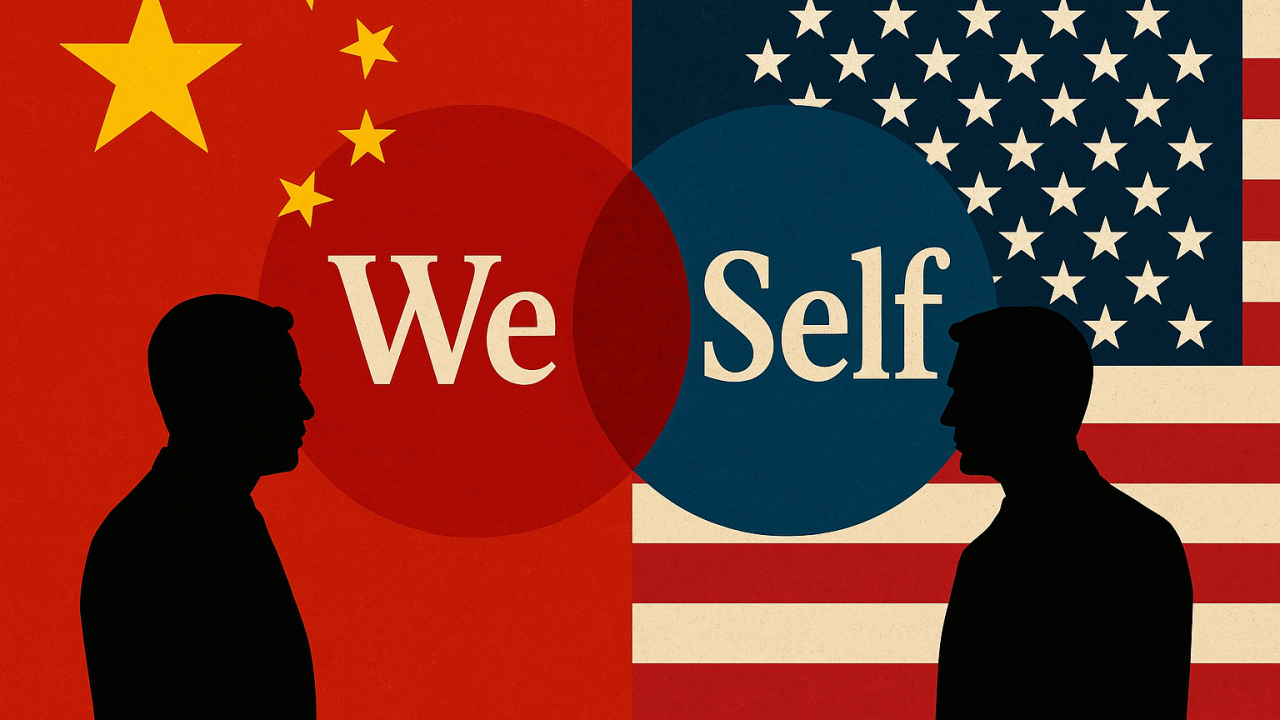
While the West, based on a relationship with the Other rooted in domination — the result of a social construction of the individual where the Self must dominate its surroundings to survive — only sees conflict, China, with a social structure based on a different way of understanding social relationships, invests in strengthening ties to collectively reduce risks.
Even if Chinese behavior is understood by the popular imagination as a kind of moral value, when going beyond the surface of morality, we find a very specific way of understanding the Other — in all situations where the Self encounters Difference.
In the West, relationships are usually the result of an agreement between two sides, still preserving the individualism and the personal idea of "what the Self means in the world." On the Chinese side, however, there is an understanding that when two sides interact, a third element — the We — emerges and must be taken care of so that the balance of the relationship remains intact.
Within this context, it’s interesting to consider what a Chinese Ministry of Commerce official said in a statement on Wednesday:
I want to emphasize that there is no winner in a trade war, and that China does not want a trade war. But the Chinese government will by no means sit by when the legitimate rights and interests of its people are being hurt and deprived.
There are no winners because there can be no mutual benefit in a relationship that doesn’t truly exist. When the third element — the We — breaks, everyone loses.
We don’t know exactly how the dynamics of global trade relations will develop, but regardless of the consequences, it’s important to recognize that the world is not a bubble — and that the West is not its center, not even in how we understand geopolitical ties.