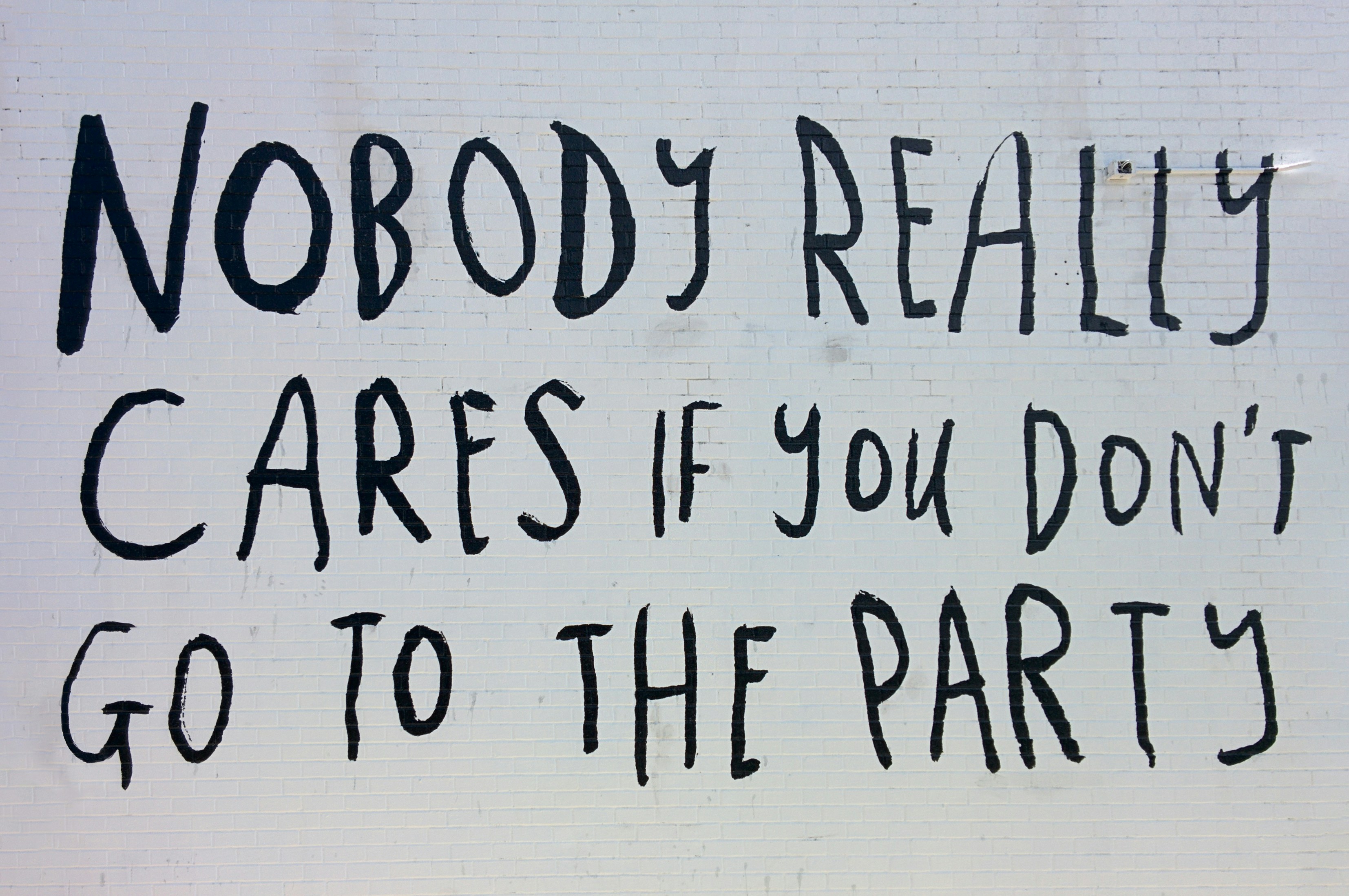
Lately I’ve been thinking a lot about the effect of social media on our daily lives and how it ends up stealing our time in exchange for nothing. Yes, stealing, because all it takes is a coffee break, and that curiosity about something that might be happening on one of them kicks in, and just like that, minutes, maybe even hours, go by. When we finally look up, everything around us is still flowing the same way it was before. It doesn’t take long to realize that, actually, nothing important was on that phone screen.
Of course the like economy wants that: it wants us to spend hours inside social media, and as if that weren’t enough, to feel a sense of urgency like a trigger every ten minutes.
Even though I’m talking about it as if it still happens to me, the truth is it doesn’t anymore.
Some time ago, bothered by that feeling of catching myself looking at my phone without a clear goal, I started using my social media only on the computer. And no, this wasn’t the result of some cheap nostalgia for 2010, it was a realization about how much the medium through which we access them changes our behavior.
I’ve known for a while that the same content is absorbed differently depending on where we access it. On TV, sitting on the living room couch, or in a movie theater, we’re much more willing to watch a two-hour feature film. When that same movie moves to the computer, our patience shrinks, distractions break the experience more easily, and as a result, we often pause the film to watch it another time. And if, for some reason, it goes to the phone, the sense of urgency increases because there are countless notifications popping up on the screen, plus the possibility of carrying the device anywhere while we’re doing something else. I’m not saying this as a criticism of cell phones, especially not of watching movies on mobile (I do that a lot myself) but I’m aware that it requires a different kind of discipline.
Back to social media. Well, the big insight I had was to experiment, starting from that feeling of urgency without reason, with using them only on the computer, the way we did in 2010. Back then, smartphones weren’t as widespread as they are today. Although they had started to become popular between 2008 and 2009, they were expensive, and there weren’t as many platforms hungry for our attention every minute. I remember well that, at least in Brazil, we used everything on the computer (Orkut, MSN, photo sites, etc.) and we didn’t realize that that model, even though it seemed limited compared to what was coming, still preserved our mental health; mainly because we turned off the computer and that was it; only the next day, after logging in again, could we see any notification.
So, even though it wasn’t a reflection that pushed me to change the way I access social media, especially the infinite-timeline kind, after a few weeks of sticking to this “old” way of using them, I saw a lot change.
At first, when going to bed and when waking up, I felt an emptiness, as if many people were at a party doing incredible things and I was left out. My way out was to use that time to get back to readings that had been competing with my phone, and that was a first win from the new model. After a few days, that feeling of being “left out of the party” disappeared, and surprisingly, when I accessed social media on the computer (still driven by a certain sense of urgency), I started to notice that, actually, the content is always very similar, the people are the same, the suggestions are similar, and that scrolling the feed is nothing more than a distraction for the brain. It was like a new way of seeing things emerging. After that, as the days went by, I noticed that on some days I went a whole day without opening social media, even while working on the computer. I even went several days without logging in because, in my mind, I already knew that I would log in and it would be the same as yesterday, the day before, etc.
Of course, I’m not preaching that people should leave social media, as many do, mainly because we live in times when conversation, chatting, has become the exception. Nowadays communication is increasingly reduced to text messages that need to have a clear function; otherwise, they become tedious. Voice messages are rejected as invasive. Even replies from close friends take weeks to arrive.
However, I understand why some people delete their accounts and start living a completely offline life. The aesthetic and professional comparison, the idea that everyone is at the peak of success and only you are an incompetent who never gets anywhere (these are examples many people report).
But the point here is exactly this: my experience on another platform made me reframe the meaning of accessing these platforms, and the result was positive, mainly because the sense of urgency no longer exists.
Can we leave? Yes, but that comes with a social price that needs to be considered. The way we communicate has changed, and social media is still a place where you can know, even indirectly, that a friend from the offline world is doing well or not; especially because phone calls no longer exist and messages on apps just to chat have become rare. We shouldn’t ignore the price that sociability charges, because no matter how much we take a voluntarist action to get rid of everything by force, being isolated from the means that today’s society has chosen to relate (and from the way it relates) means accepting a kind of loneliness.
So this text doesn’t drag on too long, what I want to say is that there is a middle ground, and it doesn’t come through complete abandonment, but through changing the medium through which we access them.
I still remember how exciting it was to turn on the computer to see if we had a message from someone, and that was because we didn’t have the ease of holding it in our hands. Of course, I have that memory, and for me it’s easier to notice the difference in uses, but for someone who was born with a device in their hands and suffers from it, seeing the change in behavior as something that can stimulate new meanings for the same things is more difficult.
I hope my account can be a stimulus for someone. It has been working well for me. It even inspired me to produce new texts, like this one (an unpretentious conversation).
The big companies built devices to keep us trapped inside them, but without leaving them, by changing the way we access them, we can use them without ceasing to see the world around us as it really is. Alive.